





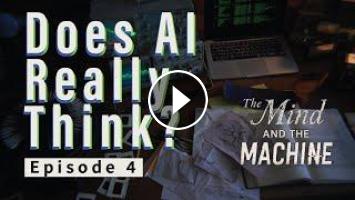
Artificial intelligence now speaks, writes, composes, calculates, and competes with unsettling ease. It reasons through syllogisms, sorts images into universal categories, outperforms human beings on exams, and produces artifacts once thought to require intellect. It even speaks about itself, using the language of doubt, reflection, and experience. Taken together, these facts give rise to a serious question: can a machine truly think and understand, or are we merely watching a sophisticated imitation of our own mental acts? In this episode of The Mind and the Machine, a philosopher examines ten of the strongest arguments offered in favor of genuine machine intelligence, from reasoning and learning to emergence, language, and the problem of other minds. None of these arguments are caricatures; all deserve careful attention. Even when they fail, they clarify what thinking actually is, and what it is not. #TheMindAndTheMachine #PhilosophyOfAI #ArtificialIntelligence #ThomisticPhilosophy #CatholicEducation
_____________________________________________________
This series examines the nature and limits of #artificialintelligence through the lens of classical #philosophy, with special attention to the thought of #Aristotle and #ThomasAquinas. Its purpose is to illuminate what #AI is, what it is not, and what its development reveals about the structure and meaning of human understanding.
Thomas Aquinas College: thomasaquinascollege.edu
The Mind and the Machine: thomasaquinas.edu/mind
_____________________________________________________
This series examines the nature and limits of #artificialintelligence through the lens of classical #philosophy, with special attention to the thought of #Aristotle and #ThomasAquinas. Its purpose is to illuminate what #AI is, what it is not, and what its development reveals about the structure and meaning of human understanding.
Thomas Aquinas College: thomasaquinascollege.edu
The Mind and the Machine: thomasaquinas.edu/mind
- Category
- Artificial Intelligence
Post your comment
Up Next
Autoplay
-
00:56

AI Machine Has Mind Of Its Own? #podcast #comedy #sundaycool #chatgpt
-
04:52
'Artificial Intelligence: Your Mind & The Machine' Coming to MOSI September 6 - January 4
-
06:07
Intro to AI Episode 2: Machine Learning Part 1 | Intel Business
-
06:59
Intro to AI Episode 3: Machine Learning Part 2 | Intel Business
-
36:31
Man vs. Machine: The Rise of Artificial Intelligence — Henry Fernandez Podcast | Episode 51
-
AI and the future of humanity | Yuval Noah Harari at the Frontiers Forum
-
13:10

Can AI really save the World? ft. Bill Gates
-
Asking Sophia, Hanson Robotic’s human-like AI robot, to show her range of emotions.
-
01:00

Man WRONGFULLY Arrested Using AI #shorts
-
00:20

Robot Attacks Factory Worker! #shorts

Comments